
Madison County Court Dockets Defined
A docket is the court's running event log for a case. It can show filings, hearings, motions, orders, continuances, pleas, trial settings, and dispositions. A calendar is different. A calendar lists what the court plans to hear on a given date or session. Madison County research found the strongest local docket material on the Clerk of Superior Court calendar page, which lists upcoming criminal motion calendars, civil motion calendars, and criminal trial calendars.
For Superior Court matters, the docket and calendar connect to the main case file kept by the Clerk of Superior Court. For Magistrate Court matters, docket activity may involve warrant applications, first appearances, bond, committal, civil claims, dispossessory cases, garnishment, or county ordinance matters. For Probate Court, traffic citation calendars and appearances are separate from Superior Court calendars. A Madison County court docket can help confirm a date, but the complete filing history may still require case-search access or clerk assistance.
Find Madison County Court Dockets
The local docket path begins with the Madison County Clerk court calendars page. That page is not a searchable database. It is a public calendar list. It can help identify hearing sessions, judge calendars, criminal motion dates, civil motion dates, and trial calendar postings before a user orders or reviews the full file. For case-level docket entries, use the Clerk's Case Search link from the official homepage or the Georgia Courts e-access path.
- Open the Clerk court calendars page when the need is a public hearing schedule or session list.
- Choose the calendar title that matches the case type, such as criminal motion, civil motion, or criminal trial calendar.
- Compare the calendar date, judge, and proceeding type with the case number or party name already known.
- Use the Clerk Case Search or Georgia e-access route if a full docket history is needed.
- Call the Clerk when a calendar has changed, a hearing is not listed, or a certified docket entry is needed.
Madison County Docket Calendars
The Clerk's calendar source is the best local public calendar channel found for Madison County dockets. The official Superior Court calendar page should be checked before relying on a prior download because calendars can change. The Middle District CM/ECF court information page shows the federal docket system used outside Madison County's local courts.
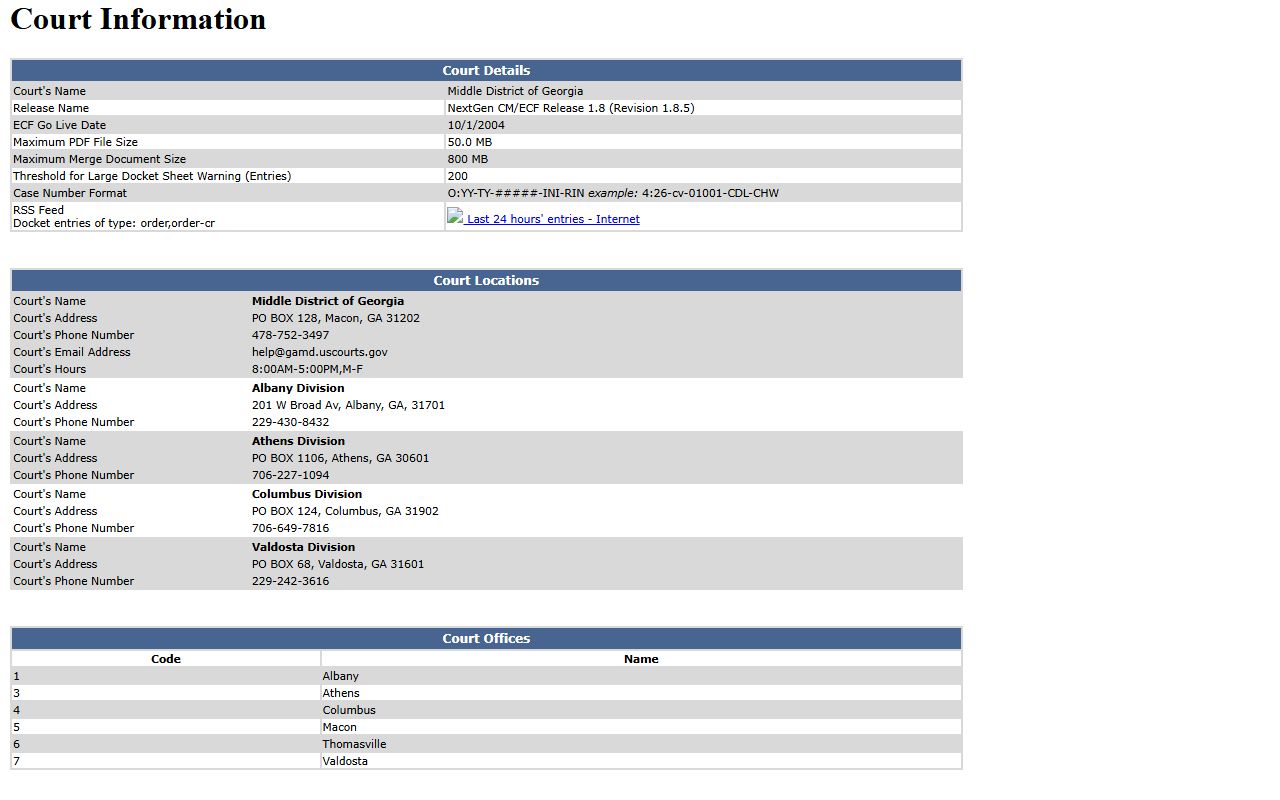
Local Madison County court docket access is narrower than a full federal docket system. The Clerk calendar list is useful for upcoming hearings. It does not replace a court-file search, and it does not show every document in the file. A person who needs proof of what was filed should use the case-search route or request a copy from the Clerk.
Madison County Docket Field Inventory
Research did not locate a public Madison County sample docket entry with every field visible, so the docket inventory combines verified local calendar fields with the normal case fields described in the research file. Use this table as a reading aid. It explains what a Madison County docket or calendar line usually tries to answer: which case, which court, what event, when it happens, and what the court did next.
| Field | What It Shows |
|---|---|
| Case Number | The court tracking number tied to the docket or case file, useful for clerk requests. |
| Court | The court level, such as Superior, Magistrate, Probate, or federal Middle District when applicable. |
| Calendar Type | The session category, such as criminal motion, civil motion, or criminal trial calendar. |
| Event Date | The hearing, filing, motion, trial, or calendar date tied to that entry. |
| Event Type | The action on the docket, such as arraignment, motion, order, plea, continuance, trial, or disposition. |
| Party or Defendant | The person or party tied to the case, when public display is allowed. |
| Judge or Session | The judge, calendar, or session name when listed on a calendar posting. |
| Disposition | The case outcome or charge outcome when the docket has reached a final entry. |
Madison County Court Docket Sources
Madison County does not have one single docket source for every court. Superior Court calendars are published through the Clerk. The Clerk's Case Search and the statewide Georgia e-access route support case-level searching when available. Magistrate Court has a separate role for warrant applications, first appearances, bond, small claims, dispossessory cases, and garnishment. Probate Court handles traffic citations, estates, marriage, vital records, weapons carry licenses, and mental-health matters.
- Superior Court dockets and calendars cover felony criminal, civil, domestic relations, real estate, divorce, and appeal or transfer matters.
- Magistrate Court dockets involve warrant applications, first appearances, bond, committal, county ordinance cases, civil claims up to $15,000, and dispossessory filings.
- Probate Court records include traffic citation appearances, estates, guardianships, conservatorships, marriage, vital records, weapons carry licenses, and mental-health matters.
- Juvenile Court records are managed through the Clerk of Superior Court but are restricted, so public docket access should not be assumed.
- Municipal court matters may exist at the city level, but the research did not locate a consolidated Madison County municipal docket list.
Madison County Dockets vs Case Records
A Madison County court docket is the case timeline. A full case record is the file behind that timeline. The docket can show that a motion was filed, a hearing was set, or an order was entered. The document itself may contain the legal argument, signature, findings, or sentence. That difference matters for court users who need a certified copy, a divorce decree, a sentencing order, or a disposition for record restriction.
| Docket | Full Case Record | |
|---|---|---|
| Format | Timeline of entries, hearings, settings, and outcomes. | Filed documents, pleadings, motions, orders, judgments, and certificates. |
| Main Use | Track case progress or confirm a court date. | Review what was filed or obtain proof of a court action. |
| Access Path | Clerk calendars, case-search provider, or clerk confirmation. | Clerk case search, clerk counter, or certified-copy request. |
| Limits | May omit sealed or restricted details and may not include document text. | May require fees, identity checks, redaction, or court order for restricted material. |
Federal Dockets for Madison County
Federal dockets are separate from Madison County court dockets. Madison County belongs to the U.S. District Court for the Middle District of Georgia, Athens Division. The Middle District CM/ECF information page lists the federal electronic filing system, case-number format, offices, PACER contact information, and docket flags. Federal records are searched through PACER/CM-ECF, not through the local Clerk of Superior Court.
The U.S. Bankruptcy Court for the Middle District of Georgia is another federal channel with its own records system.
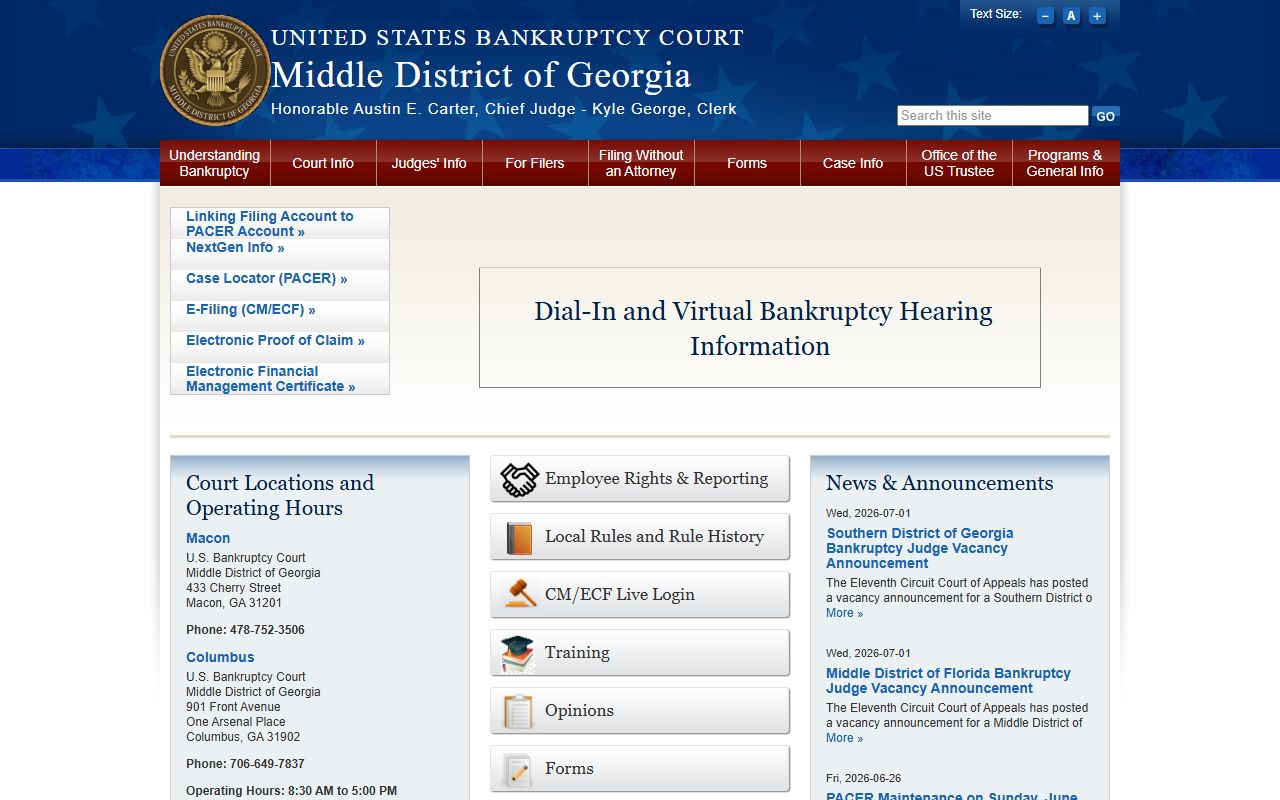
Madison County users sometimes confuse state prosecution, local court calendars, and federal court dockets because the Athens federal courthouse also serves Madison County. The local calendar tells when a Madison County Superior Court matter is heard. PACER shows federal docket entries. The clerk office that can certify a local Superior Court record is not the same office that maintains a federal docket.
Read Madison County Court Dockets
Several docket terms appear across criminal, civil, and probate contexts. A motion is a written request for a judge's ruling. An order is the judge's written direction. A disposition is the outcome of a charge or case. A continuance moves a hearing or trial to a later date. An arraignment is a criminal hearing where charges and rights are addressed and a plea may be entered. A calendar is the court's schedule, not the full case file.
For criminal Madison County dockets, a calendar may show motion or trial settings before the full case outcome is final. For civil dockets, calendar entries may show motions or hearings while the case file holds pleadings, orders, and judgments. For traffic matters in Probate Court, the docket may connect to arraignment, pleas, bench trial, sentence, appeal rights, bench warrant warnings, or license-suspension consequences.
Note: Confirm same-week Madison County docket dates with the court because calendar postings can change.
Madison County Prosecution Calendars
The U.S. Attorney's Athens Division page is relevant only for federal prosecutions in the Middle District of Georgia. State felony prosecution for Madison County is handled by the Northern Judicial Circuit District Attorney, and local criminal calendars remain a state-court matter.
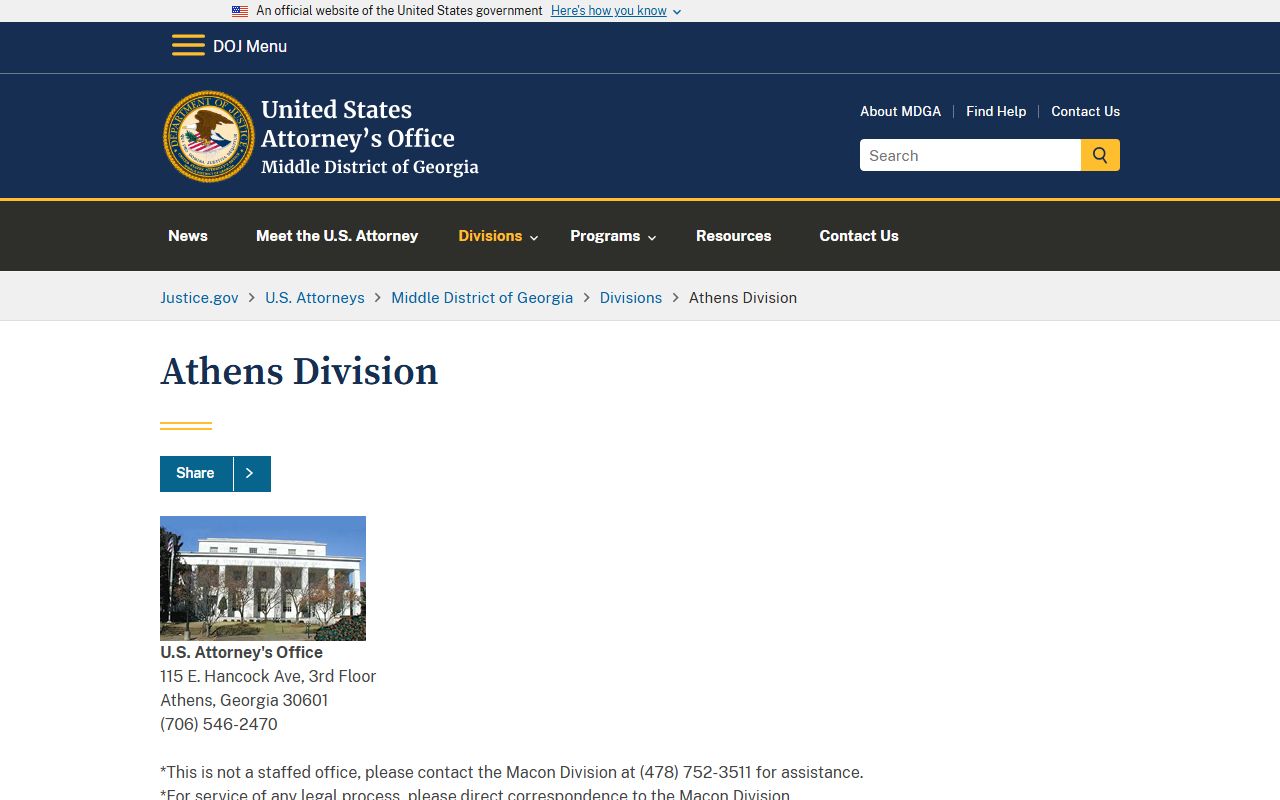
If a Madison County case is filed in Superior Court, docket questions normally go to the Clerk of Superior Court. If the case is federal, PACER and the federal clerk system apply. If the issue is a local traffic citation, Probate Court is the better starting point. The correct docket source follows the court that owns the case.