
Madison County Criminal Court Records
A criminal court record is the court-level file, not the arrest event by itself. In Madison County, felony criminal records are Superior Court records. The Clerk of Superior Court keeps the filed case materials, including accusations or indictments, motions, pleas, orders, trial records, sentencing orders, bond orders, probation terms, and disposition entries. A booking record may show custody and bond. The criminal case file shows what the court did with the case.
Magistrate Court has a major early-case role in Madison County criminal matters. Its criminal duties include arrest warrants, good behavior bonds, first appearance, bond, extradition, committal, warrant-application hearings, county ordinance trials, misdemeanor bad checks, and certain other misdemeanor matters. Probate Court handles Madison County traffic citations, which may carry misdemeanor consequences, bench warrant risk, license suspension, and appeal rights to Superior Court. Juvenile criminal-type matters are restricted and should not be treated as ordinary public criminal court records.
Search Madison County Criminal Court Records
The criminal case search path starts with the Madison County Clerk of Superior Court. Use the Case Search link from the Clerk homepage, then search by the best available case or party information. Research found that direct inspection of the WebCaseManagement destination returned a vendor error, so the safer route is to enter from the official Clerk page. The Georgia Courts e-access page also lists Madison Superior and routes users through provider account access.
- Open the Clerk of Superior Court homepage and use the official Case Search navigation.
- Search by defendant name, case number, court, case type, or date range when those fields are available.
- Review the docket entries for filed charges, arraignment, motions, plea entries, trial settings, and disposition.
- Check the Clerk court calendars when the need is a criminal motion or trial date.
- Request certified dispositions or sentencing orders from the Clerk when a court-certified record is required.
For the charging decision and prosecution office, Madison County is served by the Northern Judicial Circuit District Attorney. The DA prosecutes state criminal cases for Madison County and neighboring circuit counties. For custody status, use the jail channel, but for the full court outcome use the criminal court record. A closer view of filed charges belongs with Madison County arrest records and court charges.
Madison County Criminal Prosecution
The Northern Judicial Circuit District Attorney serves Madison County for state criminal prosecution. The office's public materials describe a prosecution role focused on crime, victims, and public safety.
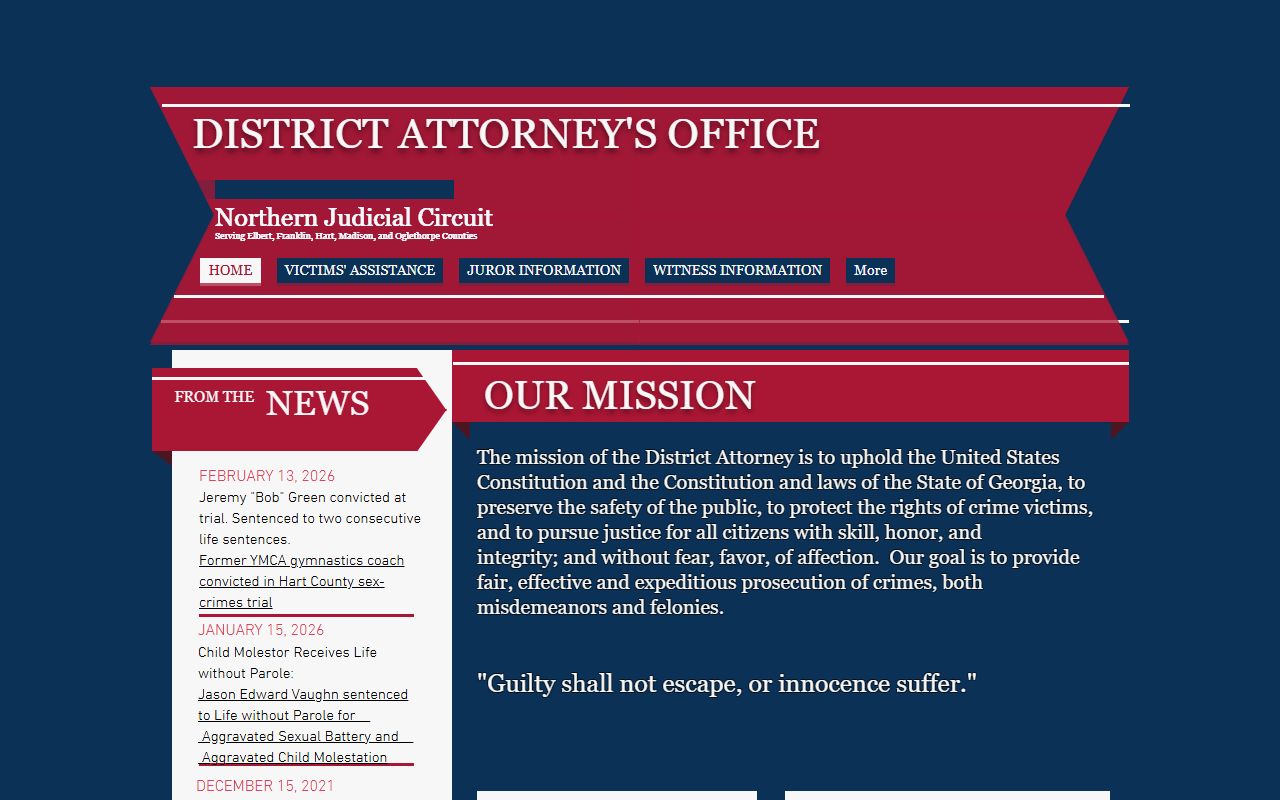
The Madison County DA contact page lists local staff and states that defendants and family members of defendants, other than victims, should contact their attorney because the DA cannot speak with them directly. That warning is important for criminal court record users. The DA may be part of the record, but the Clerk is the record custodian for filed court documents.
Madison County Criminal Case Flow
A Madison County criminal court record grows as the case moves through the court. Early events may begin with a warrant, arrest, first appearance, and bond. The court case file becomes more complete when charges are filed, a defendant appears for arraignment, motions are heard, a plea or trial occurs, and the judge enters a disposition or sentence. Each step can leave a docket entry or filed document.
Case flow: Charges Filed › Arraignment › Pretrial / Motions › Plea or Trial › Disposition › Sentencing
| Stage | What Happens |
|---|---|
| Charges Filed | The prosecutor files an accusation or indictment, or another charging paper starts the court case. |
| Arraignment | The defendant is advised of charges and rights, and a plea may be entered. |
| Pretrial / Motions | Attorneys file requests for rulings, evidence issues are heard, and calendar entries track hearings. |
| Plea or Trial | The case resolves by plea, bench trial, jury trial, acquittal, dismissal, or other court action. |
| Disposition | The court records the result of the charge or case, such as guilty, not guilty, dismissed, or nolle prosequi. |
| Sentencing | The judge enters punishment or conditions such as jail, probation, fines, bond terms, or other sentence terms. |
Madison County Criminal Record Fields
Criminal court records show the case as filed with the court. The fields differ by provider and by public-access limits, but the research identifies the common case file pieces that matter most. The docket may show every event in short form. The documents, when accessible, provide the full text of the accusation, indictment, motion, order, plea, sentence, or probation term.
| Field | What It Shows |
|---|---|
| Case Number | The court tracking number for the criminal case file. |
| Defendant | The person charged in the criminal court case, when public display is permitted. |
| Court | The court handling the matter, most often Superior Court for felony cases. |
| Charges | The accusations or counts filed in court, which may change during prosecution. |
| Attorney | Defense counsel, prosecutor appearances, or public defender references when shown. |
| Plea | The defendant's response, such as guilty, not guilty, or nolo in contexts where allowed. |
| Motions | Requests for rulings, evidence issues, continuances, or other pretrial action. |
| Disposition | The outcome of the charge or case, including dismissal, plea, verdict, or other resolution. |
| Sentence | Jail, probation, fine, conditions, or other punishment entered after conviction or plea. |
Madison County Charges vs Convictions
A filed charge is an accusation. It does not mean the defendant was convicted. Madison County criminal court records can show charges that were amended, reduced, dropped, dismissed, resolved by plea, tried to a verdict, or restricted later under Georgia law. A conviction is a court outcome after a guilty plea, verdict, or other legally recognized adjudication. Read the disposition field before treating a charge as a final result.
| Charge | Conviction | |
|---|---|---|
| Meaning | A prosecutor or court-filed accusation against the defendant. | A final court result showing guilt by plea, verdict, or qualifying judgment. |
| Where It Appears | Accusation, indictment, docket entry, jail charge field, or calendar. | Disposition, judgment, sentencing order, probation terms, or final docket entry. |
| Can Change? | Yes. Charges can be amended, reduced, added, dismissed, or nolle prossed. | Usually final unless appealed, corrected, vacated, or restricted under law. |
| How to Verify | Compare charge entries to the later disposition. | Request a certified disposition or sentence from the Clerk if proof is needed. |
Reading Madison County Dispositions
Disposition means the outcome of a criminal charge or case. A guilty plea, not guilty verdict, dismissal, nolle prosequi, sentence, probation order, or other final action can all appear in a criminal court record. Nolo is a plea type used in some Georgia contexts, including traffic matters where the court has discretion. Dismissed or nolle prossed charges should not be read as convictions.
Sentencing entries may list jail time, probation, fines, bond terms, or conditions. Some defendants move from Madison County jail custody to state custody if sentenced to a state facility. The jail record, the prosecutor's record, and the court record can each update at different times. The court disposition is the better source for legal outcome, while custody systems show where a person is held.
Sealed vs Restricted Criminal Records
Georgia criminal-history law uses record restriction, and court files can also be sealed. These are different concepts. A sealed court record is hidden from ordinary public access because a law or court order limits viewing. A restricted criminal-history record limits access for non-criminal-justice purposes under Georgia's record restriction process. The court file may still need separate review even when a criminal-history cycle is restricted.
| Sealed Court Record | Restricted Criminal History | |
|---|---|---|
| Source | Court order, law, or sealing procedure under court rules. | Georgia record restriction process under O.C.G.A. 35-3-37. |
| Effect | Limits public access to the court record or part of the court file. | Limits criminal-history access for non-criminal-justice purposes when eligible. |
| Where to Start | Ask the Clerk about the sealed court file and any order controlling access. | For older arrests, start with the arresting agency and prosecutor; newer arrests may route through prosecutor approval. |
| Madison County Contact | Clerk of Superior Court for Superior files. | Northern Judicial Circuit DA for state prosecution questions, plus the arresting agency when required. |
Defense Access in Madison County
The Georgia Public Defender Council find-a-defender page is the statewide lookup source for public defender contacts when a defendant needs appointed-counsel information.
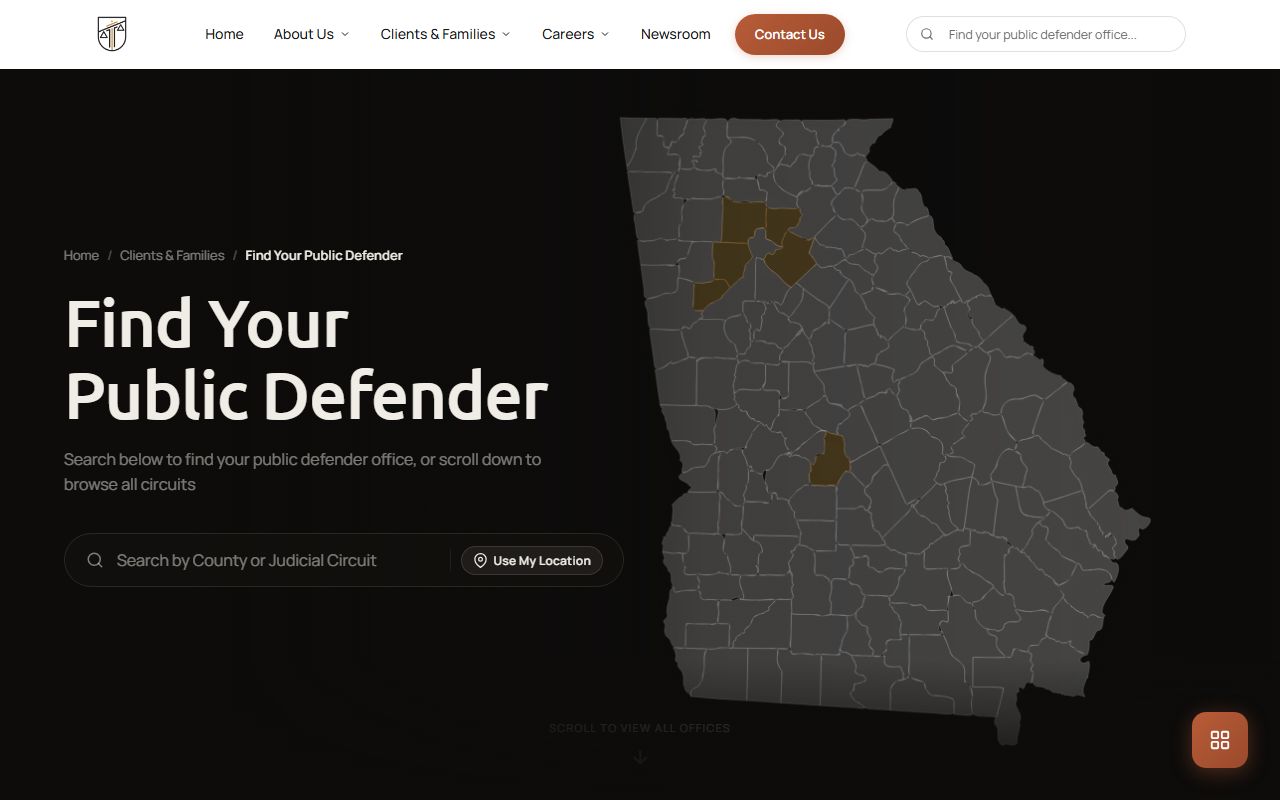
The Madison County DA contact page also gives the public defender phone number as 706-246-9320 and tells defendants or their family members to work through counsel. That instruction helps protect both sides of the criminal process. Record users can read public case information, but active defense strategy and prosecutor communications are not public-record substitutes.
Public Access to Criminal Court Records
Madison County criminal court records are subject to Georgia public-record and court-record access rules. The Georgia Open Records Act favors public access to government records while recognizing exemptions. Uniform Superior Court Rule 21 treats court records as public unless a law or proper sealing process limits access. That framework supports public case lookup, but it does not make every detail visible.
Key Statutes:
O.C.G.A. 50-18-70 - Georgia broadly defines public records and states a policy favoring open government.
O.C.G.A. 35-3-37 - Georgia record restriction rules control eligible criminal-history access limits.
Restricted Madison County Criminal Records
Restricted Madison County criminal court records can include juvenile matters, sealed cases, protected identifiers, mental-health-related material, adoption-related material, and records affected by a restriction order. Social Security numbers, financial account numbers, minor names, and sensitive personal identifiers may be redacted. A public docket may show that a record exists while withholding the document text.
For Madison County state cases, a person trying to clear a criminal history should identify whether the issue is an arrest record, charge, court disposition, or conviction. Older arrests before July 1, 2013 may start with the arresting agency, with prosecutor review and possible GCIC processing. Newer arrests may be restricted through prosecutor approval or at sentencing. Certified dispositions should come from the Clerk when proof of the court outcome is needed.